
Dichotic Interaural Intensity Difference Training (DIID) app
Frank E. Musiek, Gail D. Chermak, Jeffrey Weihing
Details: Apple App
© 2022 | Available
Dichotic Interaural Intensity Difference Training (DIID) is an app specifically for use on an iPad, and available for download in the Apple app store.
The DIID app focuses on a pivotal component of auditory training—dichotic listening. The paradigm underlying the app, dichotic interaural intensity difference training, was developed by Drs. Frank Musiek, Gail Chermak, and Jeffrey Weihing. The DIID app is based on a wealth of empirical evidence on the neuroscience, diagnosis and treatment of central auditory processing disorder (CAPD). The app provides a variety of verbal stimuli to train dichotic listening, a fundamental auditory skill crucial to recognizing speech in noise and fundamental to listening, language processing, and learning. The easy-to-use app provides the flexibility necessary to adapt stimuli for training regimens to meet individual needs in a video-game like environment for children or a more standard psychophysical paradigm for adults.
The DIID app is designed to engage users in intensive practice needed to effect positive behavioral change in dichotic listening in two modes: dichotic integration (i.e., the listener is required to identify two words or two digits, one presented in each ear simultaneously) and dichotic separation (i.e., the listener is required to identify one of two words or two digits presented simultaneously one in each ear in the ear specified. The DIID app relies on an adaptive algorithm (i.e., the program changes in response to the user’s performance) to optimize learning by training near the user's skill threshold (‘edge of competency’). Feedback is provided (reinforcement) to the user to maintain motivation, maximize engagement, provide intensive practice, and maximize training efficiency. Performance is tracked and displayed after 50 trials.
The DIID app is appropriate for use with children, adults, and older adults experiencing hearing and listening problems. Auditory processing deficits are also frequently seen in hearing aid and cochlear implant users and in individuals with disorders, such as learning disabilities, dyslexia, language impairment, attention deficit disorder (ADHD), and autism spectrum disorder.

Frank E. Musiek
Frank E. Musiek, PhD, CCC-A, is Professor and Director of the NeuroAudiology Lab, Dept. of Speech Language and Hearing Sciences University of Arizona. He is Professor Emeritus at the University of Connecticut and former Professor and Director of Audiology at the Dartmouth Hitchcock Medical Center.

Gail D. Chermak
Gail D. Chermak, PhD, is an internationally recognized authority on central auditory processing disorder (CAPD). She has published extensively and lectured around the world on differential diagnosis and treat- ment of CAPD. Dr. Chermak is professor of audiology and chair of the Department of Speech and Hearing Sciences at Washington State University. She is the recipient of numerous honors and awards, including the American Academy of Audiologys (AAA) Distin- guished Achievement Award and the Book of the Year Award for the Handbook of (Central) Auditory Processing Disorder Vols. I and II (with Frank Musiek coeditor). She is a Fellow of the American Speech- Language-Hearing Association (ASHA) and is included in several major American and international biographical listings. She has served on a number of editorial boards and national professional committees and task forces, including the 2010 AAA task force which published evidence-based clinical practice guidelines for CAPD. She has authored over 100 articles and book chapters, and authored or edited 6 books.
Auditory Processing Disorders: Assessment, Management, and Treatment
Third Edition
Donna Geffner, Deborah Ross-Swain
Details: 606 pages, B&W, Softcover, 7" x 10"
ISBN13: 978-1-94488-341-6
© 2019 | Available
Handbook of Central Auditory Processing Disorder, Volume I: Auditory Neuroscience and Diagnosis
Second Edition
Frank E. Musiek, Gail D. Chermak
Details: 768 pages, B&W, Hardcover, 7" x 10"
ISBN13: 978-1-59756-561-5
© 2014 | Available
Handbook of Central Auditory Processing Disorder, Volume II: Comprehensive Intervention
Second Edition
Gail D. Chermak, Frank E. Musiek
Details: 792 pages, B&W, Hardcover, 7" x 10"
ISBN13: 978-1-59756-562-2
© 2014 | Available
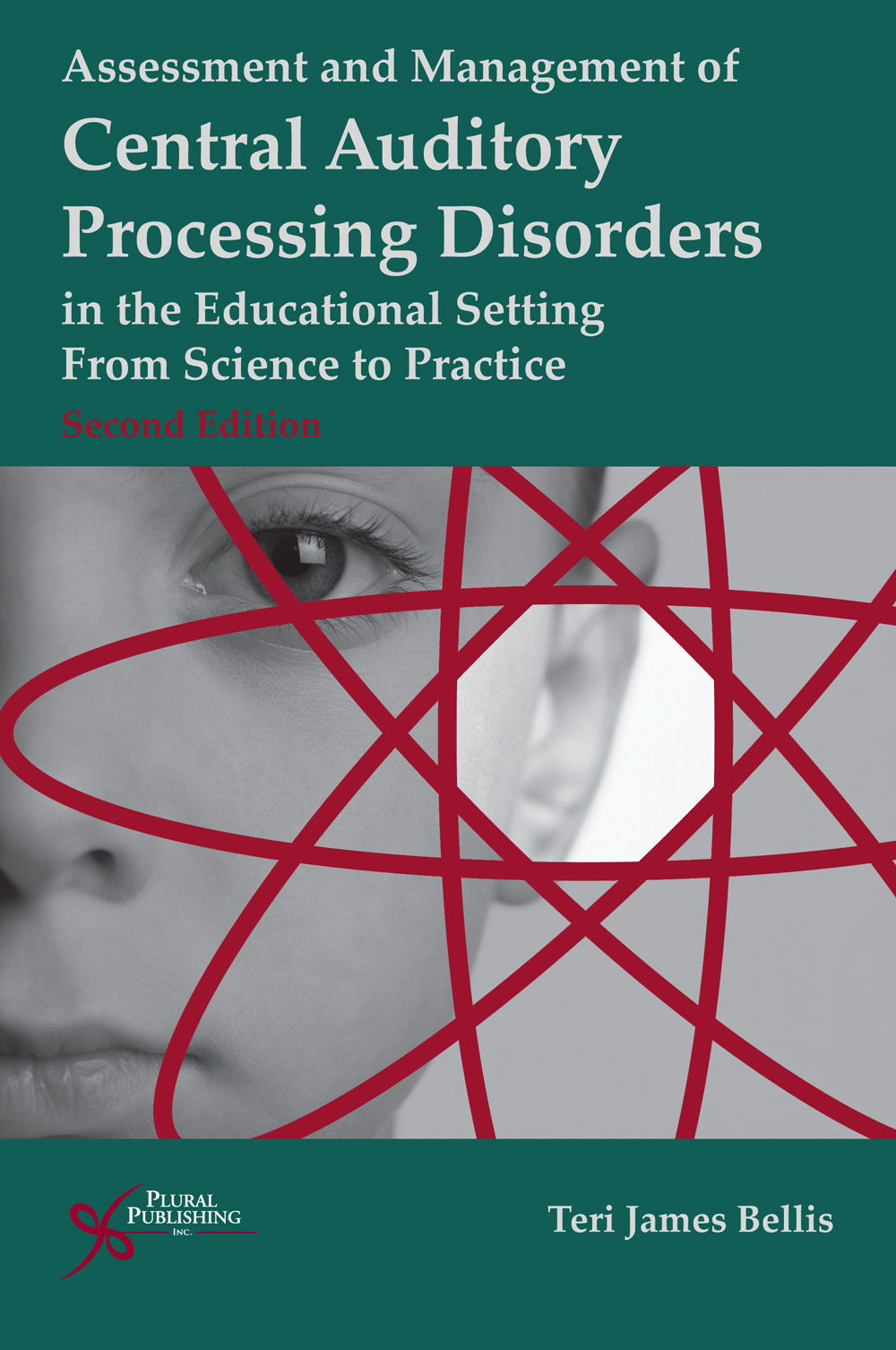
Assessment and Management of Central Auditory Processing Disorders in the Educational Setting: From Science to Practice
Second Edition
Teri James Bellis
Details: 532 pages, B&W, Softcover, 7" x 10"
ISBN13: 978-1-59756-451-9
© 2011 | Available