
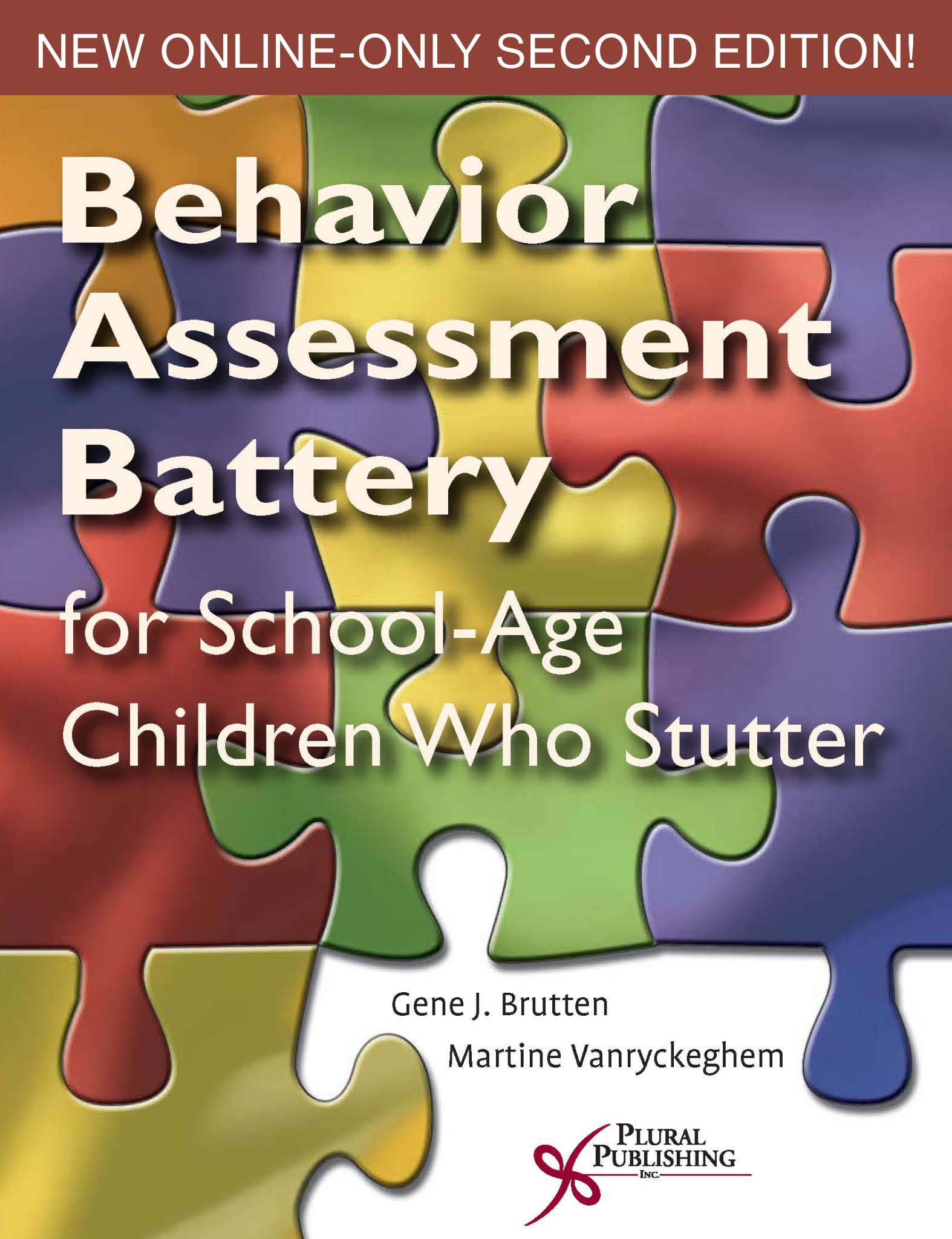
Behavior Assessment Battery for School-Age Children Who Stutter
Second Edition
Martine Vanryckeghem, Gene J. Brutten
Details: Online Access
ISBN13: 978-1-63550-341-8
© 2026 | Available
The Behavior Assessment Battery for Children and Adolescents Who Stutter, Second Edition (BAB) is a web-based, research-based assessment instrument designed to evaluate the affective, behavioral, and cognitive reactions of school-age children and adolescents who stutter. The BAB offers a multidimensional profile of how children and adolescents feel about, react to, and think about their speech and communication.
Building on decades of research and worldwide clinical use, this new online-only edition updates the original print package with an intuitive user interface, automated scoring, and immediate interpretation of the self-report test results. Clinicians simply log in, complete the questionnaires with their client, and receive results instantly—no manual scoring, norm-table lookups, or separate scoring keys required. Each score is automatically analyzed for clinical significance, streamlining decision-making and supporting evidence-based therapy planning.
Components of the BAB:
The BAB includes four self-report tests:
- Speech Situation Checklist – Emotional Reaction (SSC-ER): Evaluates the child’s emotional response across a variety of speaking situations.
- Speech Situation Checklist – Speech Disruption (SSC-SD): Measures the degree of speech disruption a child anticipates or experiences in those same situations.
- Behavior Checklist (BCL): Identifies the coping responses and strategies a child uses to avoid or escape stuttering .
- Communication Attitude Test (CAT): Assesses the child’s overall attitude toward their speech and communication abilities.
Together, these procedures give clinicians a clear, multidimensional understanding of the clients’ internal experience related to stuttering.
Clinical Use and Interpretation:
The BAB provides an “inside view” of a child’s speech-related feelings, reactions, and attitude, complementing observable behaviors gathered from traditional fluency assessments. By examining total and item-level scores across the SSC-ER, SSC-SD, BCL, and CAT, clinicians can:
- Identify the emotional, behavioral and cognitive factors that might be part of the person who stutters
- Determine areas of vulnerability and resilience
- Guide the selection of treatment strategies and therapeutic goals
- Serve as outcome measure - monitor change over time and measure progress
The BAB includes a downloadable Manual, and four tests:
- Speech Situation Checklist – Emotional Reaction (SSC-ER): Evaluates the child’s emotional response across a variety of speaking situations.
- Speech Situation Checklist – Speech Disruption (SSC-SD): Measures the degree of speech disruption a child anticipates or experiences in those same situations.
- Behavior Checklist (BCL): Identifies the coping responses and strategies a child uses to avoid or escape stuttering .
- Communication Attitude Test (CAT): Assesses the child’s overall attitude toward their speech and communication abilities.
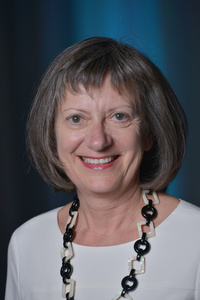
Martine Vanryckeghem
Martine Vanryckeghem, PhD received her Master's Degree (1991) and PhD (1994) from Southern Illinois University after having worked for 12 years as a speech pathologist at a clinical center in Belgium. Dr. Vanryckeghem, who is a professor at the University of Central Florida, is clinically certified as a speech-language pathologist, is an ASHA fellow, and a Board Certified Fluency Specialist. She has published widely in peer-reviewed journals and has given workshops, internationally, with respect to the assessment and treatment of children and adults whose fluency is problematic. For her international endeavors, Dr. Vanryckeghem received ASHA's Certificate of Recognition for Outstanding Contribution in International Achievement. From 1990 until 2000, she was the managing editor of the Journal of Fluency Disorders and is currently an editorial consultant for several professional journals. Dr. Vanryckeghem is on the Scientific Board of different internationally-based organizations and serves as a consultant to faculty and students of various university-based clinical programs. She was inducted in the Scroll and Quill Society at the University of Central Florida.
Behavior Assessment Battery for Adults Who Stutter (Online Access)
First Edition
Martine Vanryckeghem, Gene J. Brutten
Details: Online Access
ISBN13: 978-1-59756-901-9
© 2018 | Available